
Dissertation concept
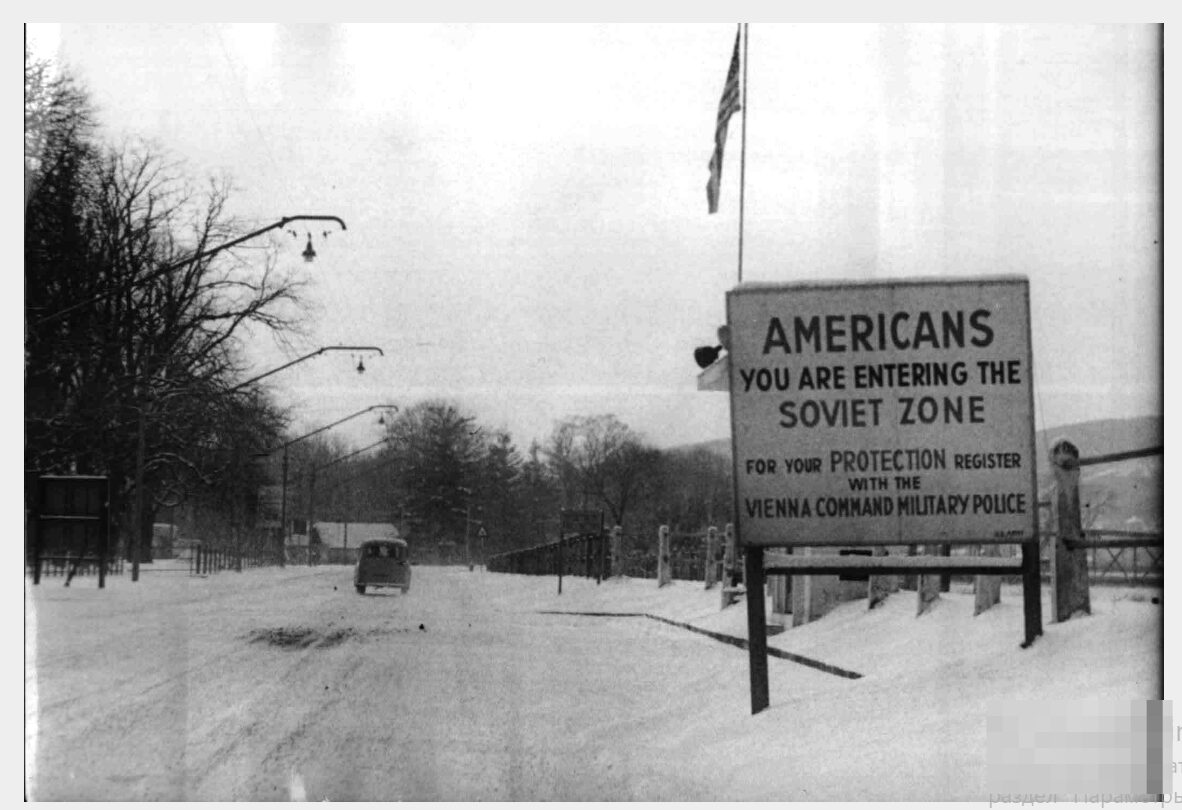
The Potsdam Conference (July 17–August 2, 1945) among other issues was designed to solve the problem of the destroyed economies of the Allies after the World War II. At the conference, it was decided to assign Allies, including the USSR, with war reparations from Germany's former abroad assets to recover their economies. For various reasons, a part of these assets was located on the territory of Austria. Thus, since 1945, the orbit of the economic interests of the USSR extended to the territory of Austria.
Terminology that secured the Allies' rights to assets was supposed to help the Allies filter out German property from Austrian and Jewish. Although the terminology seemed to be used as accurately as possible, giving legal certainty, the USSR began to interpret it in the broadest sense and eventually created extraterritorial managing Directorates in Austria.
Gradually the USSR in its zone of occupation of Austria relied on three major economic organizations, that worked independently from each other: from September 1945 on Soviet oil enterprise – SMV (Sovetskoye neftyanoye upravleniye), from February 2, 1946 on the Danube Shipping Company –– DDSG (Dunayskoye parokhodstvo), which was confiscated and then worked under Soviet control, and from March 28, 1946 on The Administration for Soviet Property in Austria – USIA (Upravleniye Sovetskim Imushchestvom v Avstrii) that managed expropriated factories, various trade companies and agricultural lands.Within this context, the phenomenon of the USSR's manageable and profitable assets located abroad appeared, as previously Soviet foreign property only referred to buildings and lands of Embassies and Trade Missions at the Ministry of Foreign Trade. These new conditions forced the Soviet management system to create on April 10, 1946 a completely new organization GUSIMZ – Main Directorate of Soviet Property Abroad (Glavnoye upravleniye sovetskim imushchestvom za granitsei) – that was parent for all branches of the Soviet property abroad acquired as reparations, including the above-mentioned USIA, DDSG, and SMV.
Working abroad, GUSIMZ provided the USSR with hard
currency, as well as with machinery, industrial and consumer products, which it
highly needed, and was a mean of both political and economic pressure on
Austria and neighboring countries. In particular, USIA and its enterprises for
many years have been an obstacle in the State Treaty negotiations between the
USSR and Austria.
In its early stage of
occupation, the USSR took advantage of its monopoly position and dictated the
price policy to the Austrian market. However, since the launch of the Marshall
Plan in Austria in 1948, the economic performance of Soviet enterprises (USIA)
began to gradually decline, largely due to the creation of the competing firms.
Moreover, later in the 1950s, the USSR faced an embargo and a ban on the sale
of goods produced in Austria to Western countries.
As a result, in the occupied territories of Austria, the USSR had to switch its business model to the orders from its own internal market and Soviet Bloc countries. Moreover, the goods and the cash flow went through a hole in its eastern border and a chain of retail discounter shops.
Although various sides of the Occupation of Austria by
Soviet Administration 1945-1955 are well examined, its economic aspect,
functioning of USIA and its parent organization GUSIMZ, is still a blind spot
for us, mainly because all Soviet written documentation has been withdrawn to
the USSR and remained secret until recently.
This research, based on declassified sources from
Russian, American and Austrian archives, intends to clarify the structure and
scope of competence of both GUSIMZ and USIA in order to better understand the
functioning of the management apparatus of the late and post-Stalinist regime,
the structure of the Soviet management system, and the relationship between the
Communist Party of Austria and the USSR.